
Article: Ceremonial cacao - Is it healing or harming and how can we move forward?
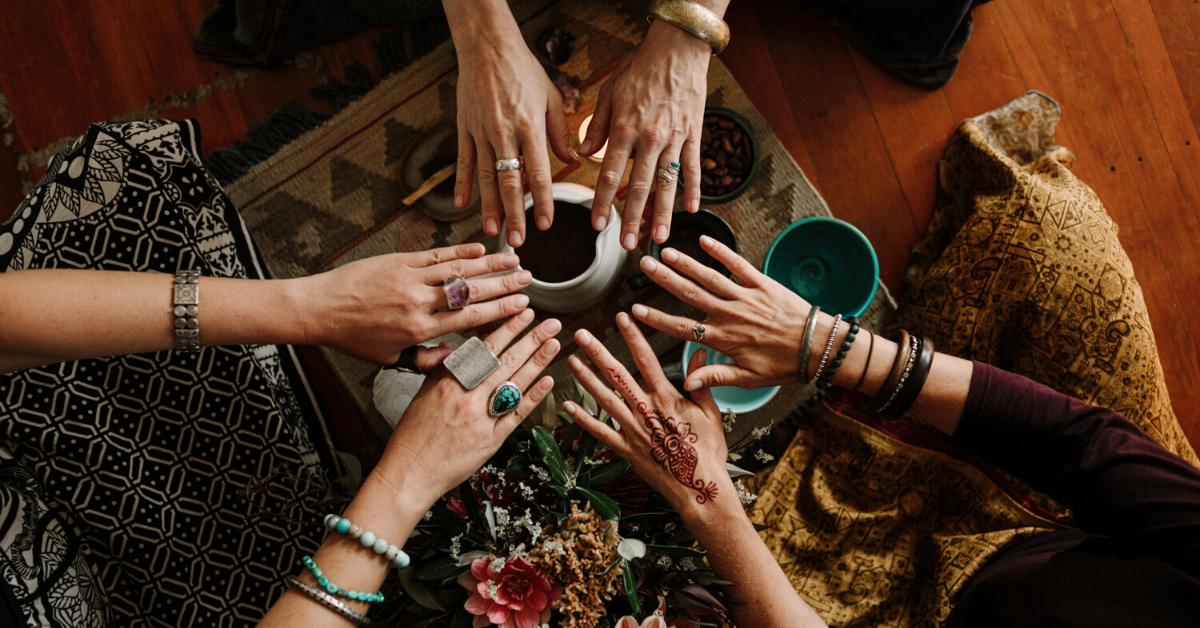
Ceremonial cacao - Is it healing or harming and how can we move forward?
I’ve been hesitant to publish this blog.
On the one hand, I may be biased because I run my own cacao business and could be trying to convince you to trust my brand over others. On the other hand, I may be a hypocrite because I ran cacao ceremonies throughout New Zealand for a number of years.
And yet, here I am, nervously sharing my current thoughts about the ceremonial cacao movement with you.
Nervous because this may be an unpopular point of view, and I’m a recovering people pleaser!
My intention is to invite you to figure out what feels good and true for you. Something here might shift your perspective on cacao. Or it might not!
What is cacao?
Cacao comes from the seeds of Theobroma cacao, a small evergreen tree native to tropical regions of the Americas.
Inside each cacao fruit, or pod, is a sweet, sticky pulp surrounding numerous large seeds, commonly called cacao ‘beans’. These seeds are typically fermented and dried after harvest and may then be roasted before being processed into the cacao products we know and love.
The pods themselves are rather extraordinary, growing directly from the trunk and larger branches of the tree.
Everything about cacao feels as colourful and complex as its long relationship with humans.
And not everything about cacao’s history is rosy or happily-ever-after. Power, status, exploitation and inequality are also woven through its story.
Cacao’s ancient story
Cacao was highly valued by several ancient Mesoamerican cultures, including the Maya and Mexica (Aztec), while archaeological evidence of cacao use in the Americas reaches even further back.
It was consumed as food and drink and played important roles in social, political, economic and ritual life.
Cacao seeds were also used as a form of currency in parts of Mesoamerica, traded for goods and services.
Cacao had ceremonial and symbolic significance too. Archaeological and historical evidence connects cacao with feasting, offerings, marriage, burial practices and religious ritual.
This is an important distinction: cacao genuinely has an ancient ceremonial history. That history is rich, complex and culturally specific.
Following European colonisation of the Americas, cacao increasingly became a valuable global commodity.
European demand grew, cacao travelled further from the places where it originated, and cultivation expanded into other tropical regions of the world.
Alongside enormous wealth and pleasure came exploitation.
Colonial cacao production became entangled with forced and enslaved labour, and the people tending cacao were often treated with little regard while others further along the supply chain accumulated wealth.
Over time cacao cultivation spread throughout tropical regions including West Africa, Southeast Asia, the Caribbean and the Pacific.
Today, generations of cacao growers around the world carry extraordinary agricultural knowledge of their own. They are an essential part of cacao’s continuing story.
And yet cacao remains a deeply unequal global industry.
It generates billions of dollars, while many of the people responsible for growing the crop receive only a small fraction of the value created further along the supply chain.
That contradiction deserves our attention.
The modern ceremonial movement – how did it begin?
This might surprise you.
One of the most influential figures in the development and global spread of the modern Western ceremonial cacao movement was an American named Keith Wilson.
Keith was a former geologist, herbalist and healer who settled in Guatemala. In the early 2000s, he described having a profound spiritual encounter with cacao that led him to explore its use in his healing work.
Keith began experimenting with high-quality pure cacao and eventually developed cacao specifically for his work, which he called Ceremonial Grade Cacao.
He began sharing cacao during individual and group healing sessions from his home in San Marcos La Laguna. These gatherings became popular with Western travellers, his students began referring to him as the Chocolate Shaman, and versions of these cacao gatherings subsequently spread around the world.
This modern ceremonial movement should not be confused with the ancient ceremonial uses of cacao by Indigenous Mesoamerican cultures.
They are different stories, even though both involve cacao and ceremony.
Ceremonial cacao – how it heals the world
A lot of good has come from the modern ceremonial cacao movement.
Keith brought our attention to intention.
He wove his personal healing experience with cacao into a powerful story, and that story had an enormous ripple effect.
Around the same period, the raw food and ‘superfood’ movements were also bringing cacao to the attention of consumers, helping people discover cacao as something beyond the ingredient used to make chocolate.
Then something else happened.
Cacao became infused with spirituality.
We began gathering in beautiful full-moon circles and at festivals, sharing our truths with one another while sipping strong cups of cacao.
It captivated and moved the hearts of many people, including mine.
My long relationship with cacao took on a whole new dimension.
How many hugs and vulnerable, tender, raw, open conversations have been shared over cacao?
How many of us have experienced a sense of belonging and acceptance during and after a cacao ceremony?
How many of us have released sadness and grief in a safe space?
How many of us have danced all night and all day?
How many of us have experienced new waves of creativity?
How many of us have made the most delicious and satisfying love after drinking cacao?
This is powerful, let’s-elevate-our-frequency, tune-into-love and connect-with-something-bigger-
So much beauty has come from this movement, and I have a lot of gratitude for Keith and his vision for cacao.
And then there’s a darker side
Unfortunately, there’s an underbelly to the spiritual and wellness world, particularly when something meaningful can also be commercialised.
This is where things start to get blurry.
As the ceremonial cacao movement grew, so did the language surrounding it.
What exactly makes cacao ‘ceremonial’?
Who gets to decide?
Who gets to use the word?
And who benefits financially from those definitions?
Over time, I began seeing increasingly rigid claims about what constituted ‘real’ ceremonial cacao, where it should come from, how it should be prepared and even who was qualified to serve it.
Mmmm, okay.
Let’s park that for a moment.
Right now, ceremonial cacao feels a little like açai and goji berries did years ago. It’s hot, it’s trendy and everyone wants a piece of it.
And in the commercial fight for shelf space, I feel some brands are creating a sense of superiority with their copy.
That doesn’t only confuse well-meaning consumers. To me, it seems to contradict the very message of equality that attracted so many of us to cacao in the first place.
Did the original idea become blurred as the movement grew?
Did social media begin creating a narrative that implied it was disrespectful to cacao — even sacrilegious — if we didn’t use it in the ‘right’ way?
Do any of us truly know what all of this means?
In a capitalist world, we can be very good at creating problems that disempower people and then selling them the solution to a problem they didn’t even know they had.
Is this perhaps part of what’s happening?
Do the blurry yet strangely structured ceremonial ‘rules’ insinuate that I can only share cacao from a place of integrity and respect once I’ve completed an extensive and expensive facilitator training course?
Is my genuine love for cacao no longer enough?
Are these courses simply useful ways to share knowledge and experience, or can certification become another commercial gatekeeper?
Can I only be seen as credible within the 'ceremonial' cacao field if I’ve invested in the right training?
And when cacao becomes this exclusive, who does that serve?
Looking back through cacao’s history, we can see repeated examples of power, status and exploitation surrounding this valuable crop.
Could parts of the modern ceremonial movement unintentionally be creating another form of elitism?
Is this why some of us feel a little ‘icky’ about the ceremonial scene?
For a long time, something within me felt off when I spoke about cacao in a ceremonial way, and I couldn’t figure out why.
Eventually it left such a bitter taste in my mouth that I stopped running ceremonies and distanced myself from the term altogether.
I don’t know the answers to all these questions.
I know only how it has felt for me.
Modern day cacao is broken and needs a lot of love…
When we become single-minded, it’s easy to forget the bigger picture.
I lost my way. I became very quiet and questioned everything about cacao and why I run my business.
And eventually something became clear to me:
The whole of cacao is aching to be seen — not just selected parts of it.
I think about modern cacao growers cultivating this crop across the globe who receive very little attention within parts of the ceremonial narrative.
Farming communities whose cacao may not fit a particular geographical or ancestral story, but whose work, knowledge and livelihoods matter enormously.
I don’t want those growers to disappear from the conversation.
How can we move forward?
What if we stopped for a minute and brought the same intention associated with ceremonial cacao into the entire global cacao industry?
An industry with deep and ongoing problems around exploitation and inequality.
What if we brought the same awareness to the chocolate we buy?
What if we cared just as deeply about the people growing cacao as we do about the experience we have while consuming it?
What if we acknowledged both ancient and modern growers so that we could celebrate cacao’s extraordinary diversity?
No superiority.
No division.
More curiosity.
More transparency.
More respect.
Could we imagine cacao that connects rather than separates us?
I believe all varieties of cacao has the capacity to offer delight and nourishment.
Whether you buy Mamamuti or not, I’m simply gaga about cacao.
I want to encourage you to take back your agency and question what you’re being sold.
As a consumer choose your source wisely. Ask better questions. Trust yourself. Have fun. Follow your curiosity..Make your own rules.
It’s that simple.
Cacao isn’t bound by the marketing labels we give it. And perhaps it can invite us to imagine something more inclusive, accessible and connected.
I don’t have all the answers.
But I’m pretty sure we can inspire change for good, side by side.



6 comments
This is an amazing perspective on the status of cacao and how integral it is to integrate it into our lives and share it with others if we have that desire. She needs all the love and rehabilitation she can get. Thank you for sharing such a powerful yet humble perspective x
Jock Barns-Graham
I sit here my heart opened by your sharing and vulnerability. Thank you! You speak into the truth that cacao medicine has revealed to me. And the sense of the unknown and the beauty that exist when we seek with childlike curiosity and open heartedness that finds a way to create more inclusivity and respect for all. I am vibrating with the truth of your sharing and the integrity that becomes alive when we all share in more transparent ways.
Thank you from my heart. ❤️🦋
Quinne
Thank you so much for this much needed perspective!
Sica B
I really enjoyed hearing your journey and some of the background story. I’ve only recently been introduced due to heath stuff I’ve swapped the morning coffee for cacao as I’d been drawn to it and intuitively do a little ceremony as part of my meditation morning routine. So to learn more about origins, the journey and heart connection is wonderful. Bless Marie
Marie
Thankyou for your strong and tender words. They make such sense to me and I am grateful for the honesty, integrity and courage it must have taken you to write them xx
Tina
Celebrating global cacao!! thanks Irma
Georgia Rose
Leave a comment
This site is protected by hCaptcha and the hCaptcha Privacy Policy and Terms of Service apply.