

Article: Cacao Powder vs Cocoa Powder
Cacao Powder vs Cocoa Powder
What’s the difference?
(Spoiler: they begin life exactly the same way.)
Let’s get the biggest misconception out of the way first.
Cacao and cocoa begin life exactly the same way.
Not different trees.
Not different species.
The difference isn’t where they come from.
The difference is what happens to the bean after it leaves the pod.
That’s what changes the flavour, the colour, the aroma and some of its nutritional profile. So if you’ve ever wondered whether cacao and cocoa are actually the same thing…
The answer is yes.
And no.
Let me explain

It all starts with one beautiful little bean.
Every block of chocolate.
Every mug of hot chocolate.
Every brownie.
Every truffle.
Every spoonful of cacao powder or cocoa powder.
It all starts life inside the pod of Theobroma cacao. (Theobroma means “food of the gods.” Which, if you’ve ever tasted beautiful cacao, feels pretty accurate.)
Once the pods are harvested, the beans are fermented, dried and usually roasted. From there, the journey can take a few different paths. And that’s where cacao powder and cocoa powder begin to tell different stories.
A little bit of chocolate history.
Back in 1828, a Dutch chocolatier named Casparus van Houten invented a hydraulic press that removed much of the natural cacao butter from cacao liquor. Despite the name, there’s no alcohol involved.
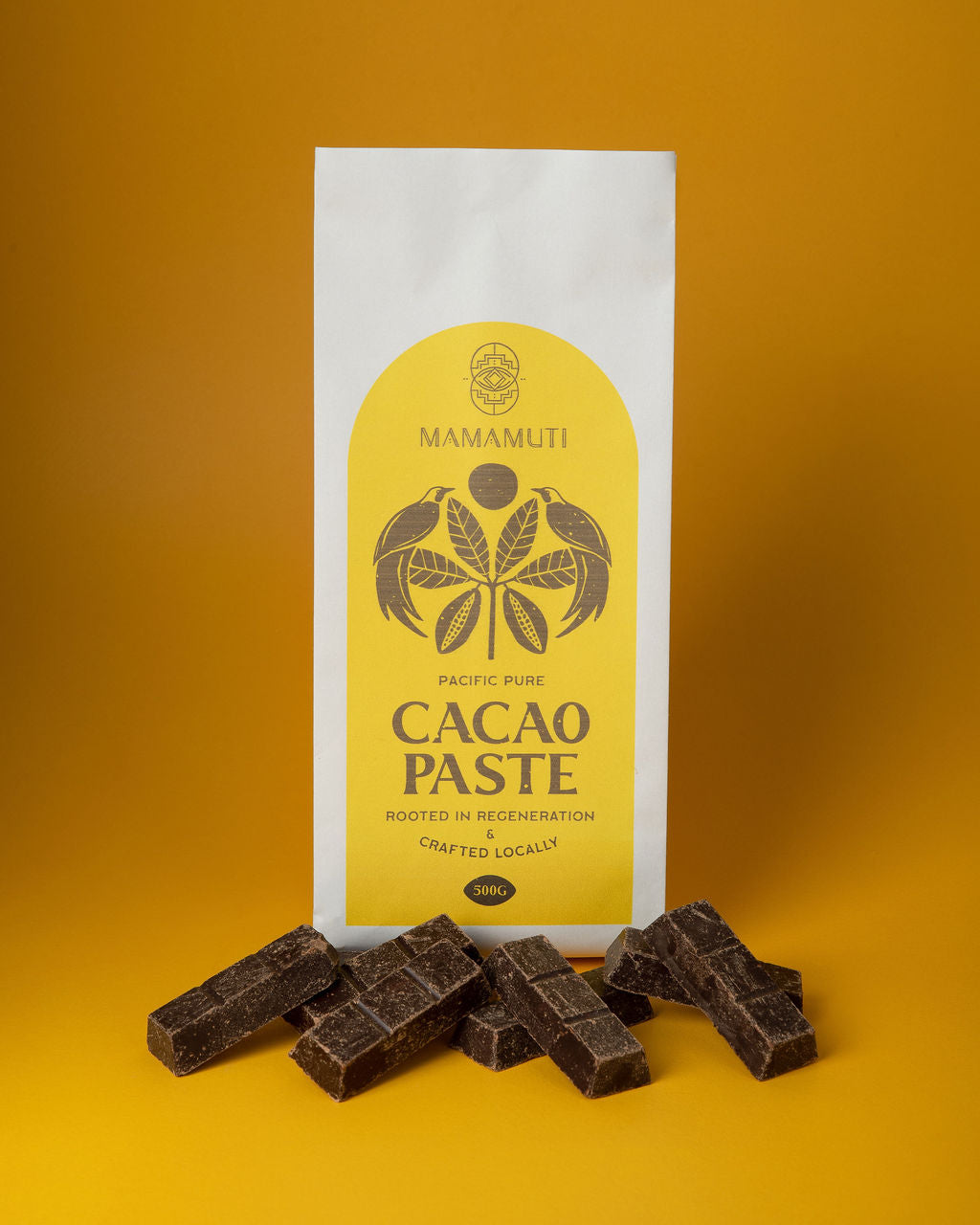
“Cacao liquor” is simply the chocolate industry’s name for pure ground cacao. At Mamamuti, we call it cacao paste.
Once much of the cacao butter had been pressed out, the remaining cake was milled into a fine powder. This changed chocolate forever. It became cheaper to produce, easier to mix into drinks and more accessible to households around the world.
Manufacturers then discovered they could take things one step further. They began treating cocoa powder with an alkaline solution, most commonly a food-grade mineral salt called potassium carbonate. The cocoa is gently mixed with this solution before or during processing, which raises its pH and makes it less acidic.
Why would they do that? Because it changes the cacao in a few noticeable ways. It creates a darker, richer-looking powder. It softens some of cacao’s naturally fruity, bright flavour notes. It gives cocoa that smooth, mellow chocolate flavour many of us grew up with. And it helps the powder dissolve more easily in milk or water.
This became known as Dutch processing, and it’s still widely used today. There’s nothing inherently wrong with Dutch-processed cocoa. It’s simply a different style of chocolate. At Mamamuti, we’ve chosen a different path.
We’d rather celebrate the bean than change its personality.
Interestingly, historians believe the word cocoa simply evolved as the English version of the Spanish word cacao somewhere along the way. Same bean. Different spelling. Different processing.
So… what’s the actual difference?
Cacao powder
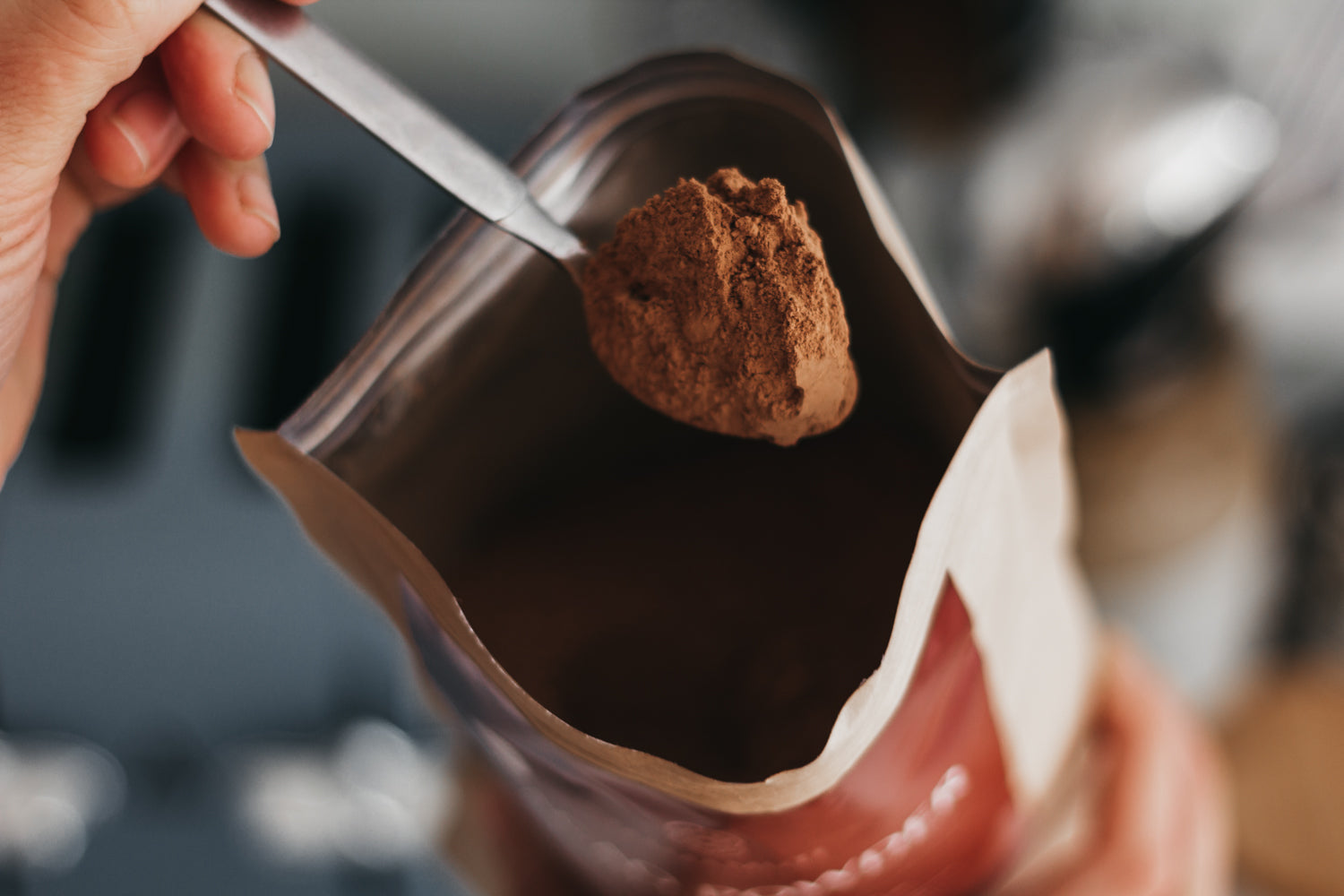
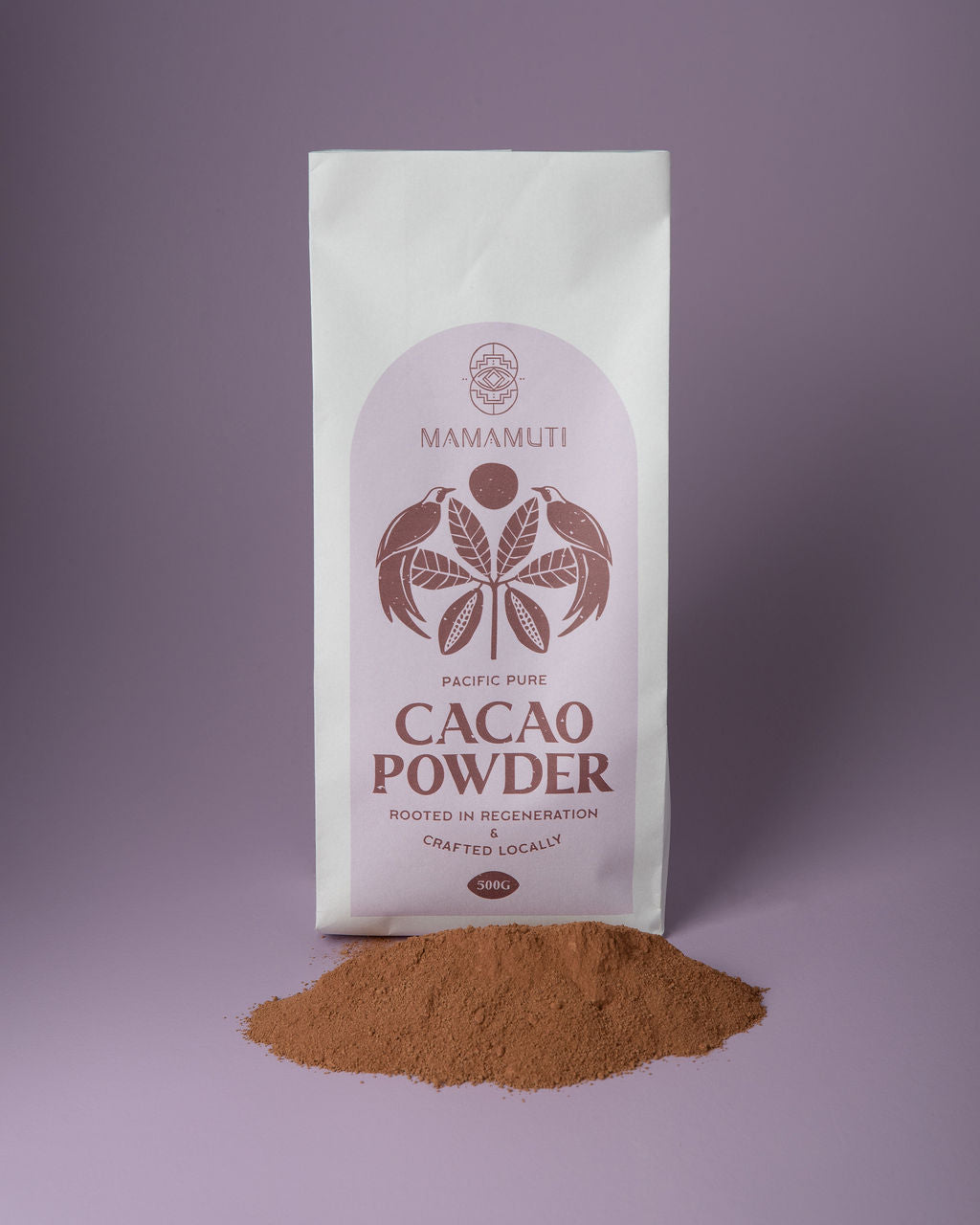
This is the one you’ll find at Mamamuti. Our cacao powder begins as cacao paste. We gently press out some of the natural cacao butter before stone-grinding the remaining cacao into a beautiful, rich powder. That’s it.
No Dutch processing.
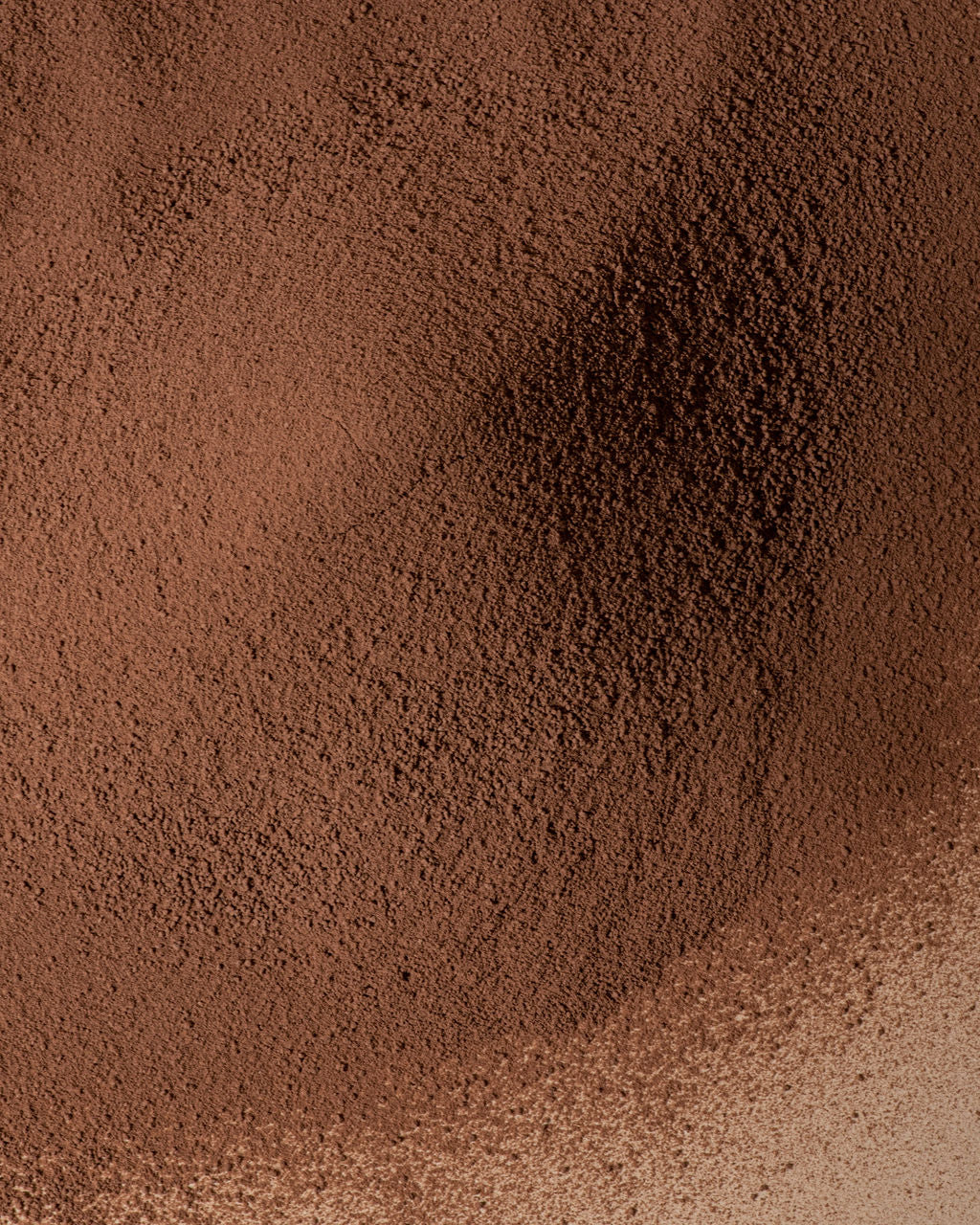
Just pure cacao doing what it does best. The flavour is bold. The aroma is complex. The colour is naturally lighter than many supermarket cocoa powders. And because it’s undergone less processing, it generally retains more of cacao’s naturally occurring polyphenols and minerals.

Cocoa powder
Cocoa powder starts exactly the same way. The difference comes later. Many cocoa powders are Dutch processed, meaning they’re treated with an alkaline solution.
This reduces acidity, creates a darker colour and produces a milder, smoother chocolate flavour. It also makes the powder dissolve beautifully and behave differently in baking.
There’s nothing inherently wrong with cocoa powder. It’s simply a different expression of the same bean.
Which one tastes better?
Well… You probably know where I stand. I don’t drink cacao because I want something sweet. I drink it because I want it to taste like the rainforest it came from.
I want those deep chocolate notes. The caramel. The fruit. The earthiness. The little surprises that every harvest and every origin brings. To me, that’s where the magic lives. Minimally processed cacao still has a story to tell.
Is cacao powder more nutritious?
Generally speaking, yes. Because cacao powder undergoes less processing than Dutch-processed cocoa, it generally retains more of its naturally occurring polyphenols.
(Polyphenols are naturally occurring plant compounds. I like to think of them as your body’s friendly little bodyguards, quietly working behind the scenes, helping to protect your cells from the everyday wear and tear caused by oxidative stress. Oxidative stress is a completely natural part of being alive. Every day, our cells are exposed to tiny amounts of damage through normal processes like breathing, movement and simply growing older. Over time, that wear and tear contributes to ageing, and polyphenols are one of the many compounds in plant foods that help support our body’s own defence systems.)
🤎 Useless (but fascinating) Mamamuti intel…
Blueberries usually steal the spotlight.
Green tea gets all the applause.
Meanwhile, cacao has been quietly sitting in the corner, absolutely loaded with polyphenols.
Sometimes the quiet ones are the most impressive. 😉 Cacao also happens to be a natural source of minerals like magnesium, iron and copper.
That doesn’t suddenly make cocoa powder “bad.” It simply means that every extra processing step changes the bean a little further from its original form.
At Mamamuti, we’re less interested in reinventing food and more interested in protecting what already makes it extraordinary.

Can I substitute cacao powder for cocoa powder?
This is probably the question we get asked most. And the good news is…
Yes, you usually can.
If you’re making brownies, chocolate cake, muffins, cookies, pancakes, bliss balls, smoothies or a cosy mug of hot chocolate, cacao powder can almost always be used in place of cocoa powder.
There are just a couple of things to know. Because cacao powder is less processed, it has a richer, more complex chocolate flavour and a little more natural acidity than Dutch-processed cocoa. In other words, your baking might taste a little bolder. A little deeper. A little more like the cacao bean itself.
If you’re following a recipe that specifically calls for Dutch-processed cocoa powder, the chemistry can be slightly different, particularly in cakes that rely on baking soda for their rise. But for the vast majority of everyday baking, it’s a simple one-for-one swap.
So if you’re standing in your kitchen with a bag of Mamamuti Cacao Powder in one hand and a brownie recipe in the other, wondering… “Can I use this instead?” The answer is almost always… Absolutely. In fact, once you’ve baked with pure cacao, you may never look back.

Why Mamamuti chooses cacao.
We didn’t build Mamamuti because the world needed another hot chocolate. We built it because we fell in love with cacao. The real stuff.
The kind with personality. The kind that reflects the soil it grew in, the people who nurtured it and the rainforest it came from.
We believe in slow food. In regenerative farming. In transparent supply chains. In celebrating flavour instead of standardising it. And in letting cacao taste exactly as cacao should.
When you begin with exceptional beans, there’s very little left to improve. Our job is simply to honour them.
The short version.
If you remember just one thing from this article, let it be this:
Cacao and cocoa come from exactly the same bean.
The biggest difference isn’t the tree. It’s the processing.
At Mamamuti, we choose minimally processed cacao because we believe extraordinary ingredients don’t need to be reinvented. They simply need to be respected. And if you ask us… That’s where the real magic begins.
Pleasure is the purpose. 🤎


%C2%A0%0ALet%E2%80%99s%20get%20the%20biggest%20misconception%20out%20of%20the%20way%20first.%C2%A0%0ACacao%20and%20cocoa%20begin%20life%20exactly%20the%20same%20way.%C2%A0%0ANot%20different%20tr...)
Leave a comment
This site is protected by hCaptcha and the hCaptcha Privacy Policy and Terms of Service apply.