


Can We Please Stop Being Afraid of Heating Cacao
One of the biggest fears I see in the cacao world is this idea that you shouldn’t let your cacao get too hot.
Don’t let it bubble.
Don’t heat it above a certain temperature.
Or you’ll “destroy all the goodness.”
I’ve heard this countless times over the years, and while I understand where the concern comes from, I think it’s time we gently questioned the story. Because when we zoom out and look at cacao’s journey, from tree to cup, heat has always been part of its story.
Cacao has never really been “raw"
Somewhere along the way, cacao became caught up in the raw food movement.
Traditionally, foods labelled “raw” are not heated above roughly 46–48°C. The idea is that lower temperatures better preserve enzymes and nutrients.
But cacao doesn’t neatly fit into that definition.
Long before cacao reaches your kitchen, it has already experienced heat.
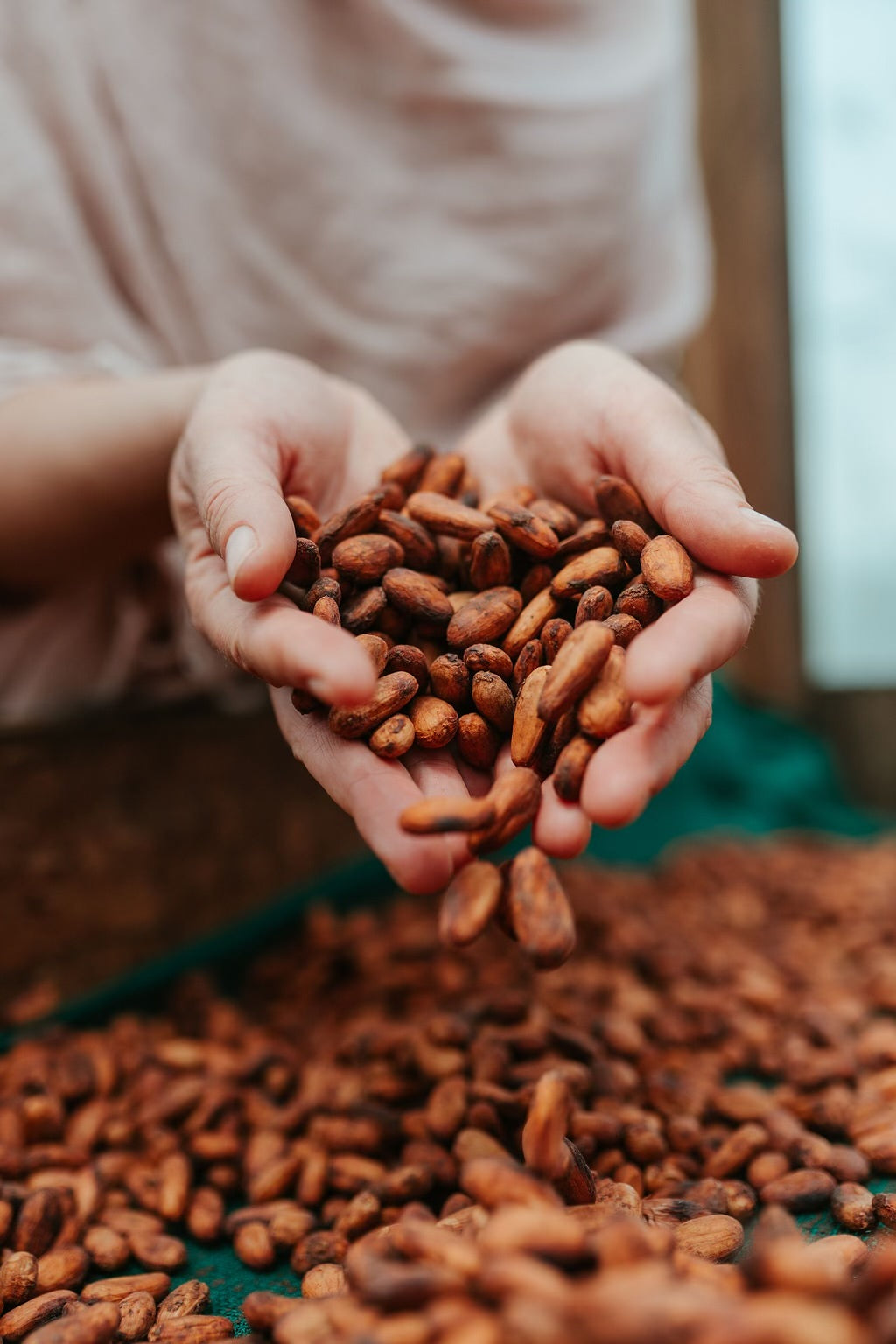
Fresh cacao beans are piled together to ferment, a completely natural process that creates its own heat. During fermentation, temperatures commonly rise well beyond what most people would consider “raw.” This stage is essential. Without it, cacao wouldn’t develop the beautiful flavours, aromas and complexity that we know and love.
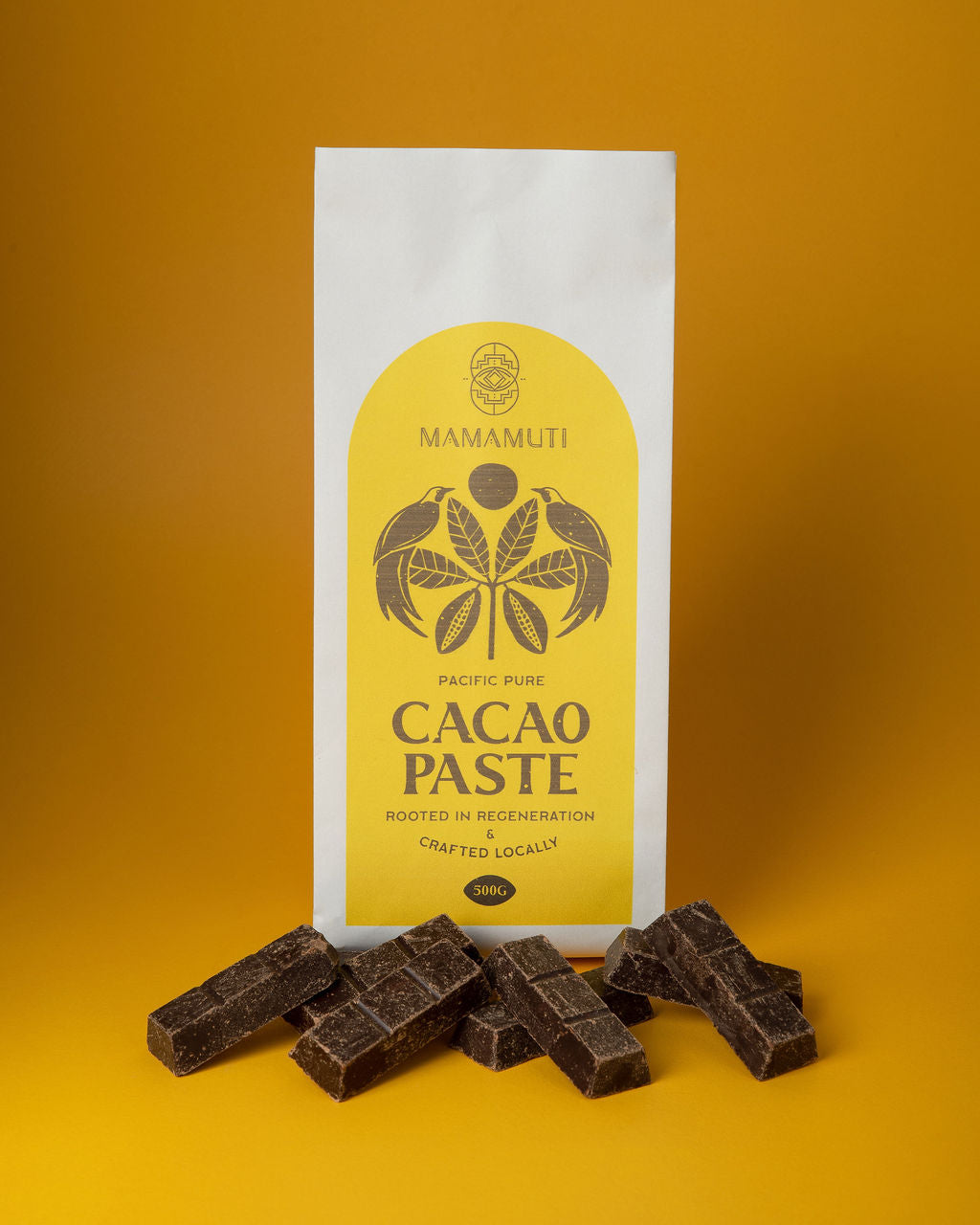
After fermentation, the beans are dried, often under the tropical sun, before most are lightly roasted to further develop flavour and prepare them for grinding into cacao paste. Traditional cacao-making has included roasting over fire for generations, and modern makers continue to roast because it transforms the bean in remarkable ways.
At Mamamuti, we don’t call our cacao “raw” for exactly this reason.
In fact, years ago I wrote that perhaps the word pure is a much more honest description than raw.
Heat isn’t the enemy
Sometimes we can become so focused on protecting nutrients that we forget to enjoy our food.
Heat changes food.
That’s true of almost everything we eat.
Cooking tomatoes increases the availability of lycopene.
Cooking carrots makes beta-carotene easier to absorb.
Coffee is roasted.
Tea is brewed.
Bread is baked.
Food is rarely static.
Yes, some compounds become more fragile with heat, while others become more available or easier to digest. Nature is wonderfully complex.
Cacao is no different.
Rather than asking, “How do I preserve every single molecule?” perhaps a better question is:
“How do I prepare cacao so that I genuinely enjoy drinking it?”
Flavour matters too
Here’s something I’ve noticed after many, many cups of cacao.
The magic often happens just before the drink begins to bubble.
That’s when the cacao butter has fully melted.
That’s when the aromas really start opening up.
That’s when the drink becomes silky, creamy and beautifully emulsified.
In my own kitchen, I prepare cacao on the stove in a saucepan. I whisk it well to incorporate a little air, and I let the heat work its magic.
The result?
A richer aroma.
A smoother mouthfeel.
A deeper chocolate flavour.
To me, that’s where cacao truly comes alive.
Are you destroying all the nutrients?
This is probably the question everyone wants answered.
The honest answer is:
Not in the way social media often suggests.
Heating cacao doesn’t suddenly turn it into nutritional cardboard.
Like every natural food, cacao contains hundreds of compounds. Some are sensitive to heat, many are remarkably stable, and others become more accessible as the bean is fermented and roasted. Even after these traditional processing steps, cacao remains one of the most nutrient-dense foods we know, rich in minerals, fibre and plant polyphenols.
The idea that one accidental boil instantly removes all of cacao’s benefits simply isn’t supported by the way cacao has traditionally been produced, or by the way it has been enjoyed for hundreds, if not thousands, of years.
Let’s stop collecting rules
This is perhaps the biggest lesson cacao has taught me.
There are so many rules floating around.
Only drink it this way.
Only buy this type.
Only prepare it below this temperature.
Only use this water.
Only use this cup.
At some point, all the rules can begin to rob us of our own sovereign experience.
My hope isn’t that you’ll replace one rule with another.
It’s that you’ll become curious.
Taste your cacao.
Experiment.
Prepare one cup a little cooler.
Prepare another cup a little warmer.
Notice how it smells.
Notice how it feels.
Notice how your body responds.
Trust your senses.
My invitation
At Mamamuti, I’m far more interested in helping people build a confident, joyful relationship with cacao than giving them another list of things they’re “allowed” to do.
Heat has always been part of cacao’s story.
It always will be.
So next time your cacao begins to gently bubble on the stove…
Don’t panic.
Smile.
Whisk.
Take a deep breath.
Then enjoy one of the oldest, most extraordinary foods on Earth exactly as humans have been transforming and celebrating it for generations.
Written by a human
Irma Schutte



Leave a comment
This site is protected by hCaptcha and the hCaptcha Privacy Policy and Terms of Service apply.