
Article: Ceremonial Cacao: What Is It, Where Did It Come From and Is It Really Different?
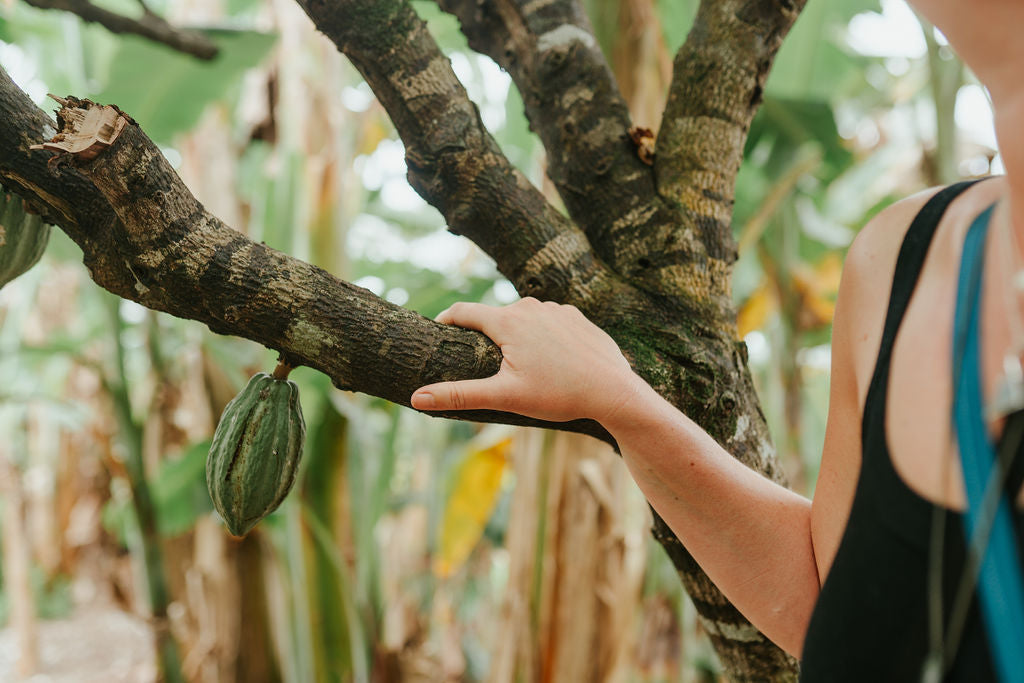
Ceremonial Cacao: What Is It, Where Did It Come From and Is It Really Different?
If you’ve spent any time in the wellness world lately, you’ve probably heard of ceremonial cacao.
Maybe you’ve drunk it in a circle.
Maybe you’ve bought a bag labelled ceremonial grade.
Maybe you’ve been told it’s a special type of cacao, grown or processed differently from ordinary cacao.
Or perhaps you’ve simply wondered:
What actually makes cacao ceremonial?
I’ve been working with cacao for years, and it’s a question I’ve become increasingly interested in.
Because once you start pulling at the threads, a fascinating story emerges.
And it isn’t quite the story we’ve been sold.
First, cacao really does have an ancient ceremonial history
This part matters.
Cacao has been cultivated, consumed, traded and deeply valued by Indigenous peoples of Mesoamerica for thousands of years.
It featured in religious practices, celebrations, offerings, marriage, diplomacy, medicine, feasting and social life.
Cacao also carried enormous economic and political importance.
That history is extraordinary enough without embellishing it.
But there’s an important distinction we need to make.
Ancient ceremonial uses of cacao are not the same thing as the modern product category we now call “ceremonial cacao.”
Those two things have become rather conveniently tangled together.
So let’s untangle them.
Where did modern “ceremonial cacao” come from?
This is where we meet a man named Keith Wilson.
Keith was an American geologist, herbalist and healer who became known as the Chocolate Shaman.
In the late 1990s and early 2000s, Keith was exploring cacao and its use for spiritual and inner work in Guatemala.
According to Keith’s own writings and the organisation that continues his work today, he began making cacao specifically for this purpose.
By 2003, he was serving cacao to people who gathered on his porch in San Marcos La Laguna, Guatemala.
Those gatherings became known as cacao ceremonies.
And Keith called the cacao he produced for this work:
Ceremonial Grade Cacao.
Here’s the really interesting part.
Keith’s Cacao itself now describes those early gatherings as Keith’s own creation.
They weren’t recreations of an ancient Maya cacao ceremony.
There wasn’t a prescribed ancient ritual being followed.
People drank cacao and Keith worked with whatever arose in the group.
Over time, people who experienced Keith’s work took the idea elsewhere.
Cacao became paired with meditation.
Breathwork.
Dance.
Sound healing.
Yoga.
Reiki.
Women’s circles.
Retreats.
Festivals.
And countless other modern wellness practices.
The modern cacao ceremony was born.
And it travelled.
Then “ceremonial” became a product
This is the part I’m particularly interested in.
Somewhere along the way, ceremonial cacao stopped only describing what people were doing with cacao and started describing the cacao itself.
Today you’ll find ceremonial cacao and ceremonial grade cacao being sold all over the world.
And here’s the problem:
There is no universally recognised grade of cacao called ceremonial grade.
It’s not a botanical classification.
It’s not an internationally regulated food grade.
It’s not determined by the percentage of cacao butter.
There isn’t one universally accepted processing method that turns cacao into ceremonial cacao.
And there isn’t an independent global standard that separates “ceremonial” cacao from ordinary 100% cacao paste.
Different brands define it differently.
One might say it needs to be minimally processed.
Another might say it must be grown in a particular region.
Another talks about intention.
Another talks about genetics.
Another talks about energy.
Another talks about Indigenous lineage.
And another simply puts CEREMONIAL CACAO on the bag.
That should make us curious.
So what is actually inside the bag?
This is where things become beautifully simple.
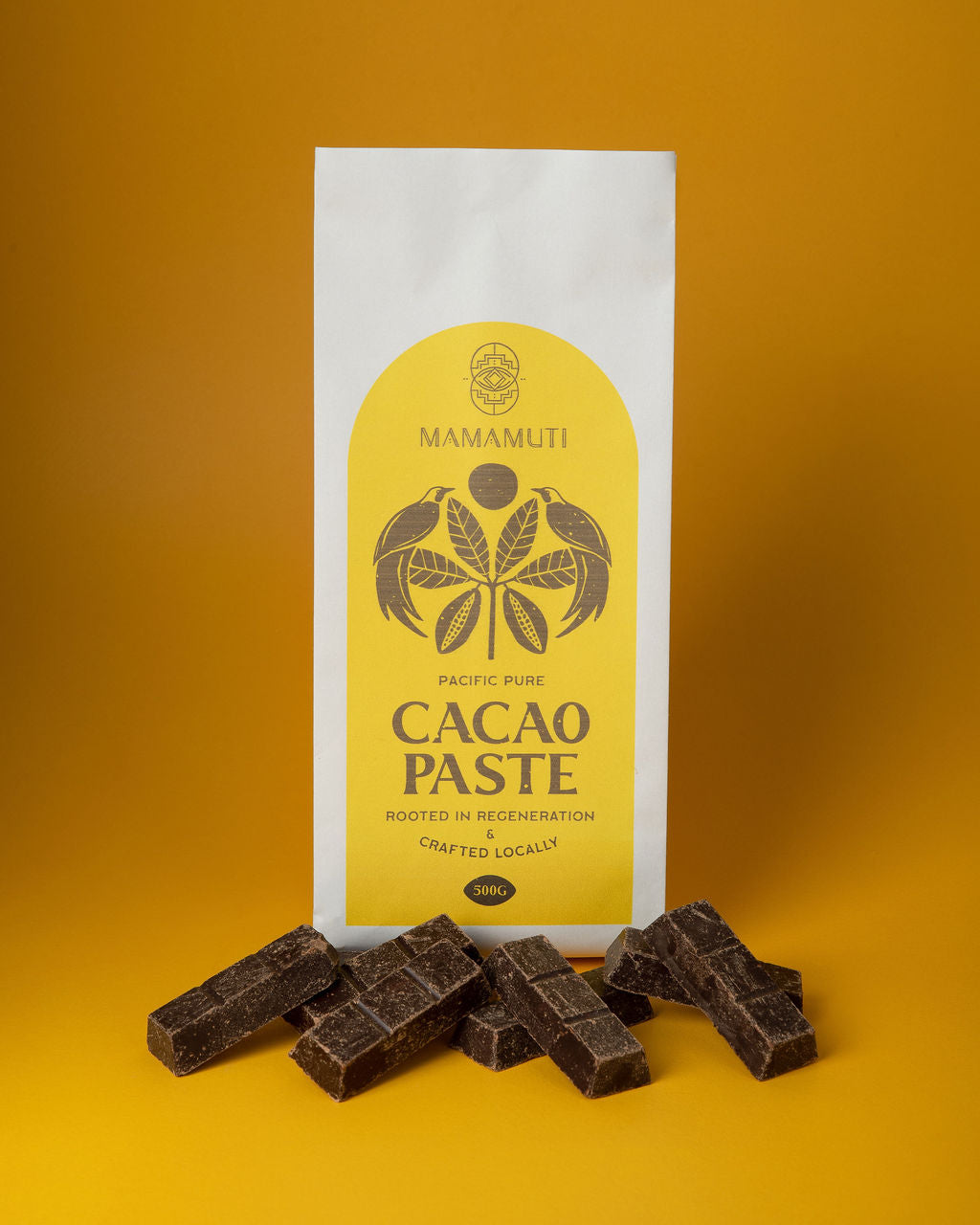
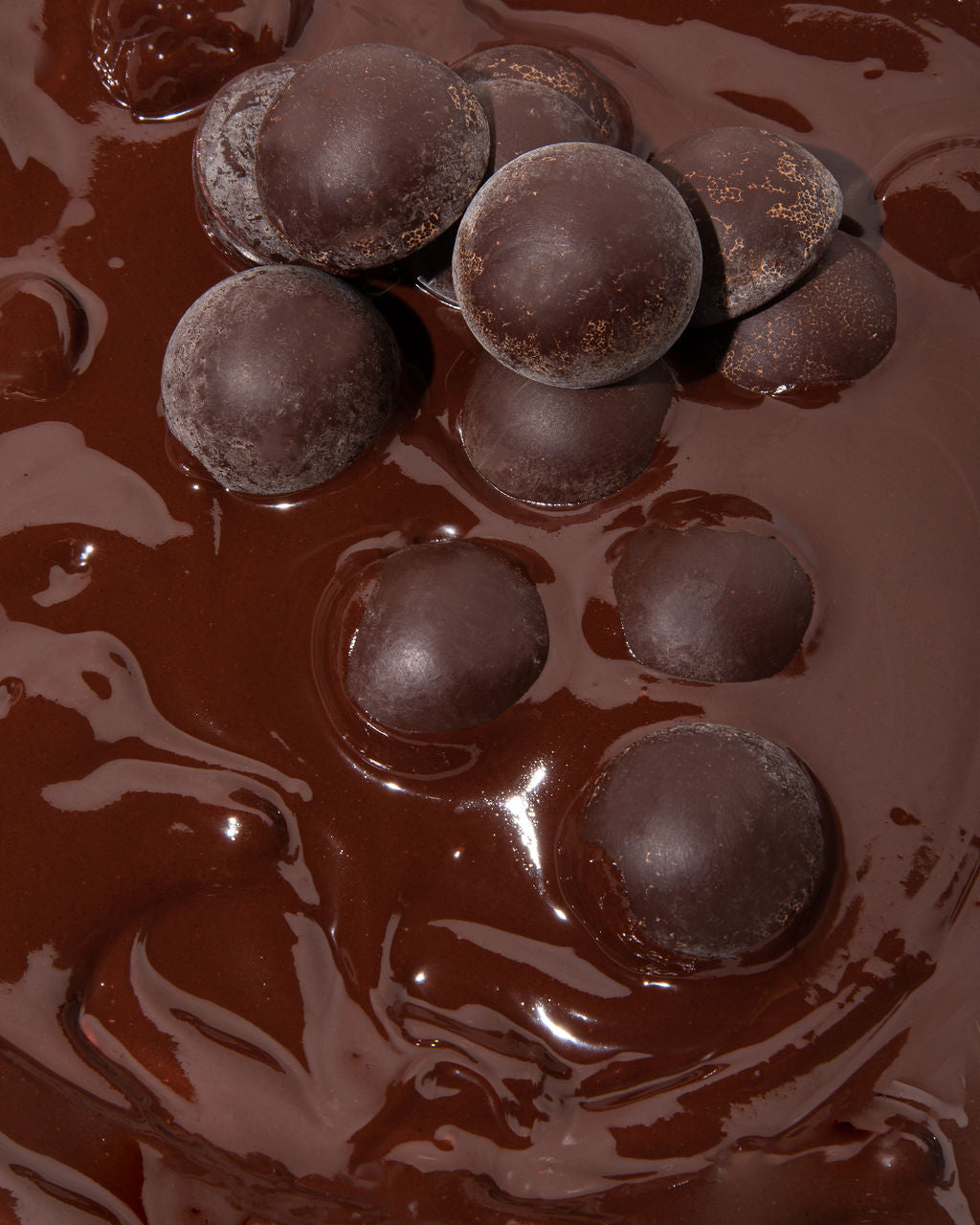
Most products being sold as ceremonial cacao are essentially 100% cacao paste.
Cacao seeds are harvested.
Fermented.
Dried.
Usually roasted or heated to some degree.
The shells are removed.
The cacao is ground.
The natural cacao butter remains in it.
And eventually you have a solid mass of cacao.
Cacao paste.
Cacao liquor.
Cacao mass.
Different names for essentially the same fundamental product.
It can be exceptional cacao.
It can be carefully fermented cacao.
It can be beautifully sourced cacao.
It can be grown by incredible farmers and processed with extraordinary care.
But none of those things requires us to call it ceremonial grade.
And this is where Mamamuti changed its mind
Mamamuti used to use the word ceremonial too.
I’m not interested in pretending otherwise.
I used the language that was being widely used within the cacao world.
And then I started asking more questions.
The deeper I’ve gone into cacao … it’s farming, processing, genetics, history, trade and modern marketing the less comfortable I’ve become with calling our cacao paste ceremonial cacao.
So, years ago, we stopped.
Now, we call it what it is:
Pure cacao paste.
Not because I think ritual is silly.
Quite the opposite.
I love ritual.
I think humans have always created ritual around food, plants, birth, death, love, seasons, community and change.
And if you want to light a candle, put on beautiful music, gather your friends, sit under the moon and drink cacao together, please do.
That experience belongs to you.
The ritual can be sacred without needing the cacao to be a special grade.
That’s an important distinction.
I also think Keith deserves to remain in the story
It’s very easy when debunking something to go hunting for a villain.
I’m not interested in doing that.
Keith Wilson clearly had an enormous influence on the modern cacao movement.
Thousands of people discovered cacao through the work he began.
And interestingly, Keith’s own story actually helps clarify the history.
The organisation carrying on his work openly describes his cacao gatherings as something he created rather than an ancient ritual he inherited.
That’s important.
Because honouring ancient cacao cultures and acknowledging a modern Western spiritual movement can happen at the same time.
We don’t need to turn one into the other.
Why does any of this matter?
Because words create value.
Put 100% cacao paste on one bag.
Put sacred ceremonial grade cacao on another.
Suddenly we’re not necessarily comparing cacao anymore.
We’re comparing stories.
And stories affect what consumers are willing to pay.
That’s when I want us to start asking questions.
What makes this cacao “ceremonial”?
Who decided?
Is there a standard?
Is the farmer paid more because it’s ceremonial?
Does any of that additional retail price reach the farming community?
Is the cacao genuinely different?
Or have we simply changed the language surrounding it?
Those aren’t cynical questions.
They’re consumer questions.
Maybe we don’t need to strip cacao of its magic
Maybe we need to strip away the marketing surrounding the magic.
Because cacao really is extraordinary.
It has thousands of years of human history.
It has extraordinary chemistry.
It has cultural significance.
It provides livelihoods for millions of people.
It tastes incredible.
It brings people together.
And yes, drinking cacao can absolutely become a ritual.
But perhaps cacao doesn’t need an invented grade to make any of that true.
At Mamamuti, we’ve decided we’d rather tell you where our cacao comes from, how it was grown, who produced it, how it was processed and what you’re actually buying.
Then you decide what it means to you.
Call it breakfast.
Call it an afternoon pick-me-up.
Call it dessert.
Call it ritual.
Call your friends over and make an entire evening of it.
Just don’t confuse the ritual with the grade.
Because perhaps the most respectful thing we can do for cacao is stop dressing it up as something it isn’t.
Cacao is already extraordinary.
This is part of UNDRESSING CACAO - an ongoing Mamamuti conversation stripping away the marketing, mythology and wellness speak surrounding one of the world’s most extraordinary foods.


Leave a comment
This site is protected by hCaptcha and the hCaptcha Privacy Policy and Terms of Service apply.