Cacao FAQs NZ
Frequently Asked Questions
What is cacao?
Cacao is where chocolate begins.
It comes from the fruit of Theobroma cacao, a tropical evergreen tree native to South America. Inside each colourful cacao pod you’ll find a sweet, juicy pulp surrounding roughly 30–50 seeds — the cacao beans.
Those beans are fermented, dried and usually roasted before being transformed into cacao paste, powder, butter, nibs and, of course, chocolate.
Humans have been eating, drinking, trading and loving cacao for thousands of years. Safe to say, the obsession isn’t new.
Why is cacao so good for you?
Because underneath all the hype, cacao really is an extraordinarily nutrient-dense food.
Pure cacao contains minerals including magnesium, iron, copper, manganese and zinc, alongside fibre, cacao butter and naturally occurring plant compounds called flavanols.
It also contains theobromine — cacao’s dominant stimulant — plus a smaller amount of caffeine. Together these are part of what gives cacao its distinctive gentle lift.
But we’re not interested in turning cacao into a supplement or breaking it down into a hundred different health claims.
It’s food. Really good and delicious food.
What does Mamamuti mean?
Mamamuti means Mother Medicine.
Mama honours my late Mum, whose deep trust in the wisdom of nature shaped the way I see the world. It also honours Mother Nature herself — the greatest teacher I know.
Muti is a Zulu word for medicine. I grew up in KwaZulu-Natal, South Africa, surrounded by extraordinary Zulu women who helped raise me. Their love, wisdom and way of being left an imprint on me that I carry to this day.
When I prepare, serve and share Mamamuti, I feel the presence of my Mum, Mother Nature and those remarkable women.
Mamamuti is my way of honouring them all.
What does cacao taste like?
Forget everything you think you know about hot chocolate.
Pure cacao is rich, complex and beautifully grown-up. Depending on its genetics, where it’s grown and how it’s fermented, dried and roasted, you might taste caramel, berries, dried fruit, nuts, flowers, spice, malt, earthiness or natural bitterness.
Like coffee, wine and olive oil, cacao has terroir. Different origins — and even different harvests — can taste completely different.
Some people fall in love at first sip. Others need a few dates.
Stay curious. Play with your recipe. Trust your taste buds.
There’s no correct way to drink cacao. We’re much more interested in the way that gives you the most pleasure.
How much cacao should I have?
There is no official “ceremonial dose” of cacao.
Cacao is food, not a prescription.
If you’re new to pure cacao, start small and see how you feel. Theobromine and caffeine affect people differently, and more isn’t necessarily better.
You might want a small cup one day and something richer the next.
Don’t get too tangled up in cacao rules.
Start small. Taste. Notice. Adjust.
Your cup, your call.
What’s the difference between cocoa and cacao?
Plot twist: cocoa is cacao.
Both come from exactly the same plant: Theobroma cacao.
The words “cacao” and “cocoa” are used inconsistently across the industry, and there isn’t a universal processing line where cacao suddenly becomes cocoa.
Generally, “cacao” is now used for products marketed as less processed or closer to the whole bean, while “cocoa” is commonly used for cocoa powder and conventional chocolate ingredients.
What matters far more than the word on the packet is what’s actually inside it and how it was grown and processed.
Read the ingredients. Ask about the origin. Ask how it was made.
That’s where the interesting stuff is.
Why is shade-grown cacao important?
Cacao evolved as an understory tropical tree, and growing it amongst other trees can create a much richer agricultural ecosystem than intensive monoculture.
Well-managed cacao agroforestry can support biodiversity, soil health, carbon storage and climate resilience while providing farmers with other useful crops and sources of income.
But shade isn’t automatically good and full sun isn’t automatically evil. Cacao farming is more nuanced than that.
What matters is how the whole ecosystem is managed.
We like cacao grown amongst life.
Can cacao grow anywhere?
Nope. It's tropical.
Cacao originated in South America, with the Upper Amazon recognised as an important centre of origin and genetic diversity.
It thrives in warm, humid environments with abundant rainfall and is generally cultivated within roughly 20 degrees north and south of the equator.
Which is why, despite our enthusiasm, we’re not planting a Mamamuti cacao plantation in Raglan anytime soon.
Where does the term “ceremonial cacao” come from?
This one deserves some nuance.
Cacao has been used culturally, socially, medicinally and ceremonially by Indigenous peoples of the Americas for thousands of years. That history is real, complex and extraordinarily rich.
But the modern Western cacao ceremony movement is something different.
The contemporary movement was heavily influenced by American geologist and healer Keith Wilson, who settled near Lake Atitlán in Guatemala in the early 2000s. Wilson became known as the “Chocolate Shaman” and called the cacao he produced Ceremonial Grade Cacao. His gatherings became known as cacao ceremonies and spread internationally through travellers and practitioners.
Modern cacao ceremonies may draw inspiration from cacao’s ancient history, but they shouldn’t automatically be presented as direct continuations of ancient Maya, Aztec or other Indigenous traditions.
And importantly, “ceremonial grade” is not a universally recognised botanical, agricultural or quality grade for cacao.
It’s a modern term.
Why doesn’t Mamamuti call its cacao “ceremonial”?
Because somewhere along the way, cacao got a little too complicated.
For a long time I used the word “ceremonial”. Eventually I realised that all the rules, doses, claims and seriousness surrounding cacao were taking me further away from the thing I loved about it in the first place.
Cacao had become something I was analysing instead of enjoying.
So I dropped the label.
For me, cacao is cacao.
Bean. Nib. Paste. Powder. Tea. Chocolate. Brownie. Cake. A pot bubbling away on the stove.
I can deeply respect cacao’s history, the farmers who grow it and the extraordinary food itself — while still having a good time with it.
Those things can coexist.
In fact, I think they should.
Pleasure is the purpose.
Is cacao safe during pregnancy?
Cacao is a food, but it also naturally contains caffeine and theobromine, so pregnancy isn’t the time for sweeping wellness claims or enormous “ceremonial doses”.
If you already enjoy cacao, consider the amount you’re having alongside your total daily caffeine intake and speak with your midwife, doctor or healthcare professional if you’re unsure.
If you’re completely new to pure cacao, pregnancy probably isn’t the moment to start experimenting with very large quantities.
Small. Sensible. Delicious.
Can I have cacao while breastfeeding?
Generally, yes — but cacao contains caffeine and theobromine, and babies vary in their sensitivity.
Caffeine passes into breast milk in small amounts. If you notice your baby becoming unusually restless, jittery or having trouble sleeping after you’ve consumed cacao or other caffeinated foods and drinks, consider reducing your intake and talk with your healthcare professional.
Remember that coffee, tea, chocolate, energy drinks and cacao all contribute to your total caffeine intake.
Is cacao paleo or keto friendly?
Pure cacao contains no added sugar and can fit within many paleo and lower-carbohydrate ways of eating.
Whole cacao paste and nibs retain the bean’s natural cacao butter, while cacao powder has had some of that fat pressed out.
Whether something fits your particular version of “keto” is between you and your macros.
We’re staying out of that argument.
Does cacao contain caffeine?
Yes.
Cacao naturally contains caffeine, although theobromine is its dominant methylxanthine.
The exact amount varies considerably according to cacao genetics, origin and processing, so we’re wary of universal claims such as “one cup of cacao contains exactly X mg of caffeine.”
If you’re sensitive to stimulants, start with a smaller amount and notice how your body responds — particularly later in the day.
Some people happily drink cacao at night.
Some would be staring at the ceiling planning a new business by 2am.
Know thyself.
Is cacao suitable for children?
Cacao can be enjoyed as a food by children, but remember that pure cacao naturally contains caffeine and theobromine.
For little humans, keep portions small and consider their overall intake of chocolate and other caffeinated foods and drinks.
And perhaps don’t serve them an enormous cup of cacao just before bedtime unless you’re feeling particularly adventurous.
Can I bake with Mamamuti cacao?
Absolutely.
Bake it. Blend it. Melt it. Sprinkle it. Make brownies with it.
Mamamuti cacao paste, powder and nibs can all be used in baking and desserts depending on the recipe.
If you want deep, proper chocolate flavour rather than something merely chocolate-ish, you’ve come to the right place.
How do I store Mamamuti cacao?
Keep your cacao somewhere cool, dry and dark, away from direct sunlight, heat, moisture and strong smells.
Once opened, seal the bag properly or transfer your cacao to an airtight container.
No fancy altar required.
How do I make a cup of cacao with Mamamuti cacao paste?
Team saucepan over here.
Gently heat around 250–300 ml of water or your favourite milk in a saucepan, add your cacao and whisk until completely melted and emulsified.
Add a tiny pinch of salt — it softens bitterness and makes the chocolate flavour sing — then sweeten or spice it however you like.
Whisk it. Froth it. Blend it carefully.
Pour into your favourite cup.
Drink.
Swoon a little.
Is “raw cacao” really raw?
This is another cacao rabbit hole.
“Raw” isn’t a particularly precise term when it comes to cacao. Most cacao undergoes fermentation and drying, both of which involve temperature changes, and much of it is roasted before being processed.
Roasting is also one of the major stages in developing the chocolate flavours we know and love.
So rather than obsessing over “raw”, we’d rather tell you what actually happened to the cacao.
Was it fermented? Dried? Roasted? Where was it grown? Who processed it?
Pure tells us more than “raw” ever could.
What’s the difference between cacao paste and cacao powder?
One very delicious word:
FAT.
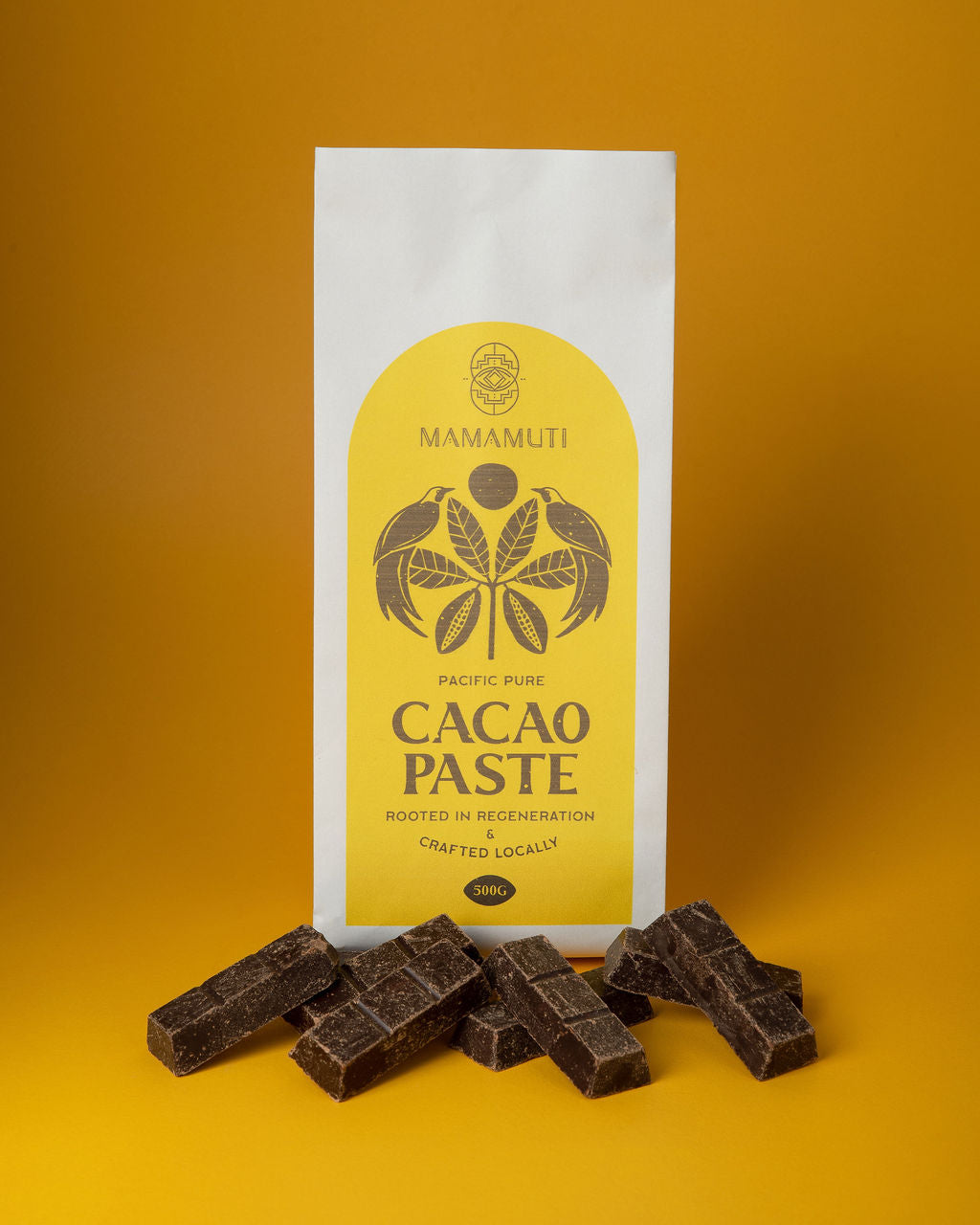
Cacao paste is the whole cacao bean ground into a smooth mass, so it still contains its naturally occurring cacao butter.
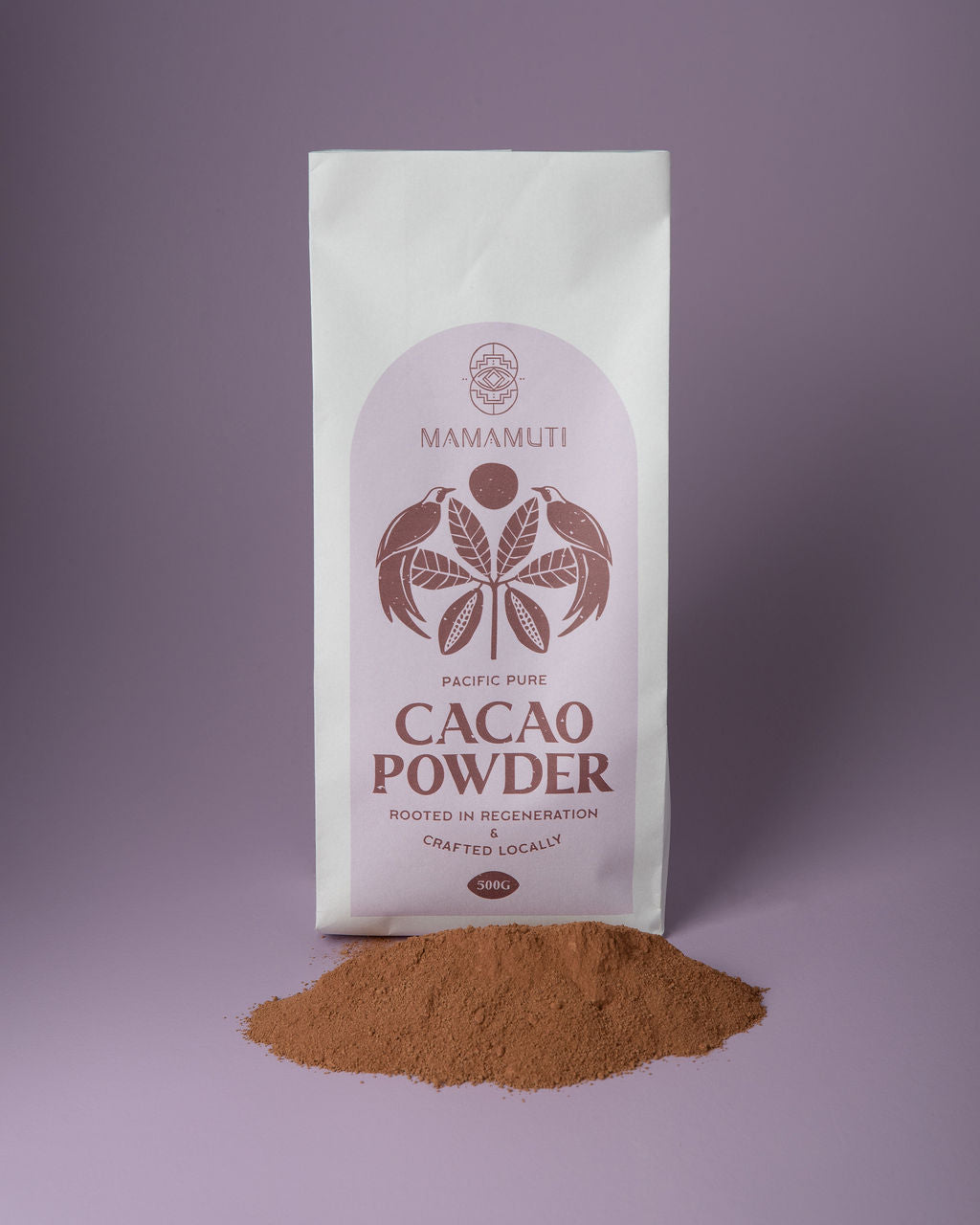
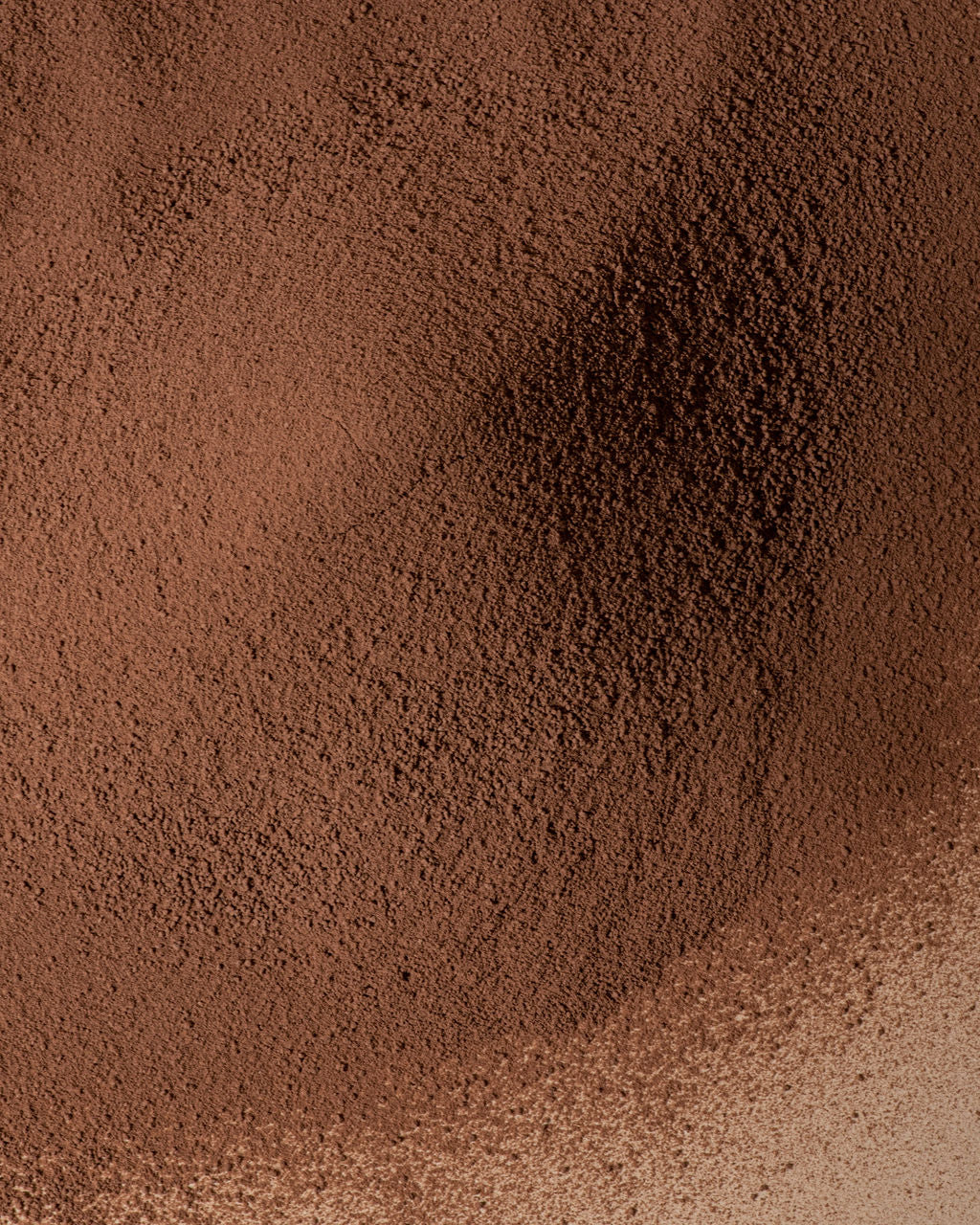
Cacao powder is produced by pressing some of that cacao butter out of cacao liquor/paste, leaving a lower-fat cacao cake which is then milled into powder.
Paste = rich, creamy, whole-bean goodness.
Powder = lighter, intensely chocolatey and ridiculously versatile.
Neither is “better”.
They’re different expressions of the same glorious bean.
Does Mamamuti cacao contain sugar?
Our pure cacao products contain no added sugar.
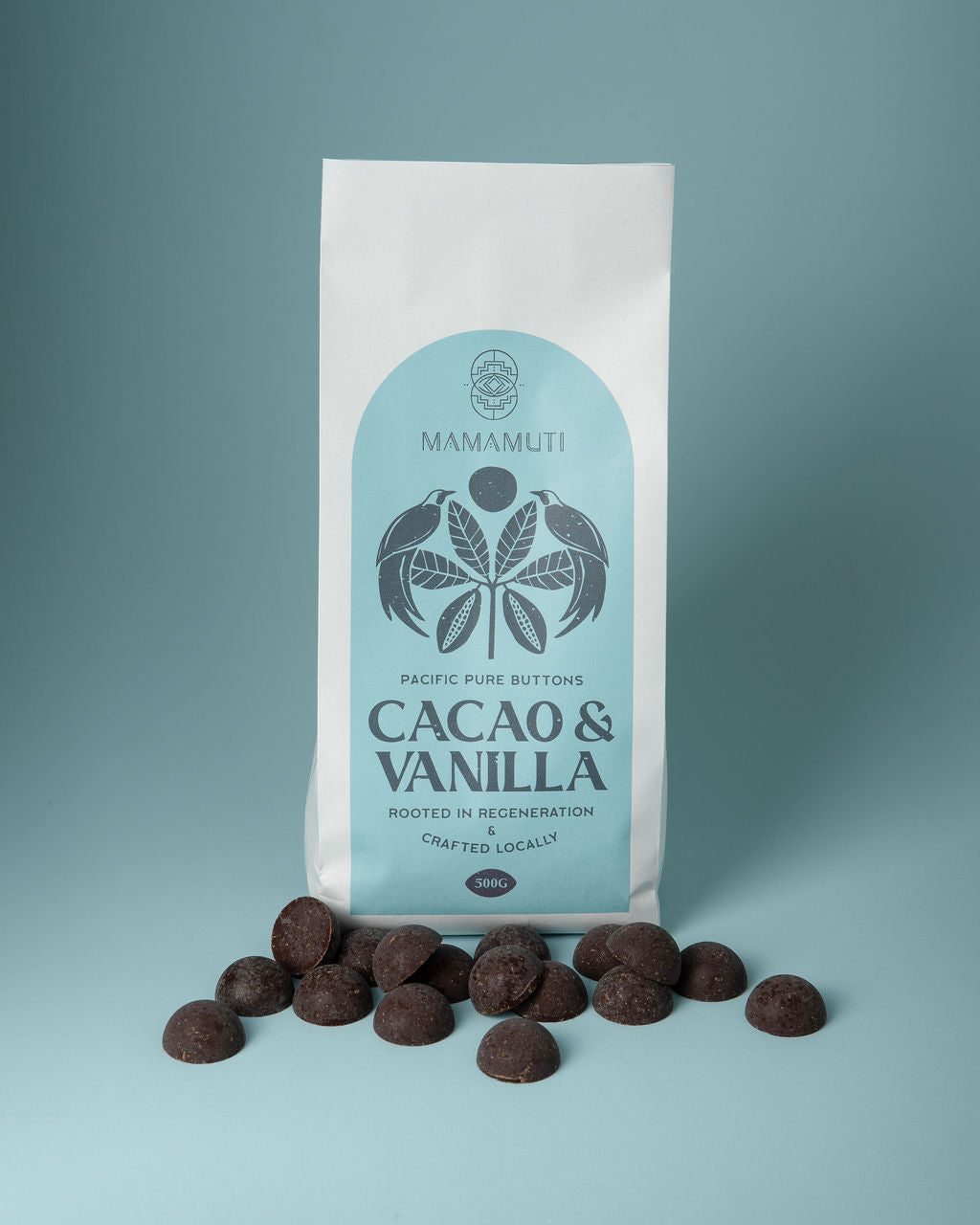
Always check the individual product ingredients, particularly for Mamamuti products that contain other ingredients or chocolate.
What about heavy metals in cacao?
Yes, cacao can contain naturally occurring heavy metals, particularly cadmium, and lead contamination can also occur during growing, drying, processing or handling.
Levels vary enormously according to geography, soil, environmental conditions and processing.
This is why we’re much more interested in transparency and testing than pretending the issue doesn’t exist.
Where testing is available for our cacao, we’re happy to share the results.
Want to see them? Ask us.
Why does my cacao sometimes have white patterns or waves?
Don’t panic. Your cacao hasn’t gone rogue.
Those pale or white patterns are usually cacao butter bloom — the natural fat in cacao crystallising or moving to the surface as temperatures change.
Pure cacao paste isn’t necessarily tempered like a glossy chocolate bar, so it can look marbled, blotchy or crumbly.
It’s completely normal and doesn’t mean the cacao is mouldy or spoiled.
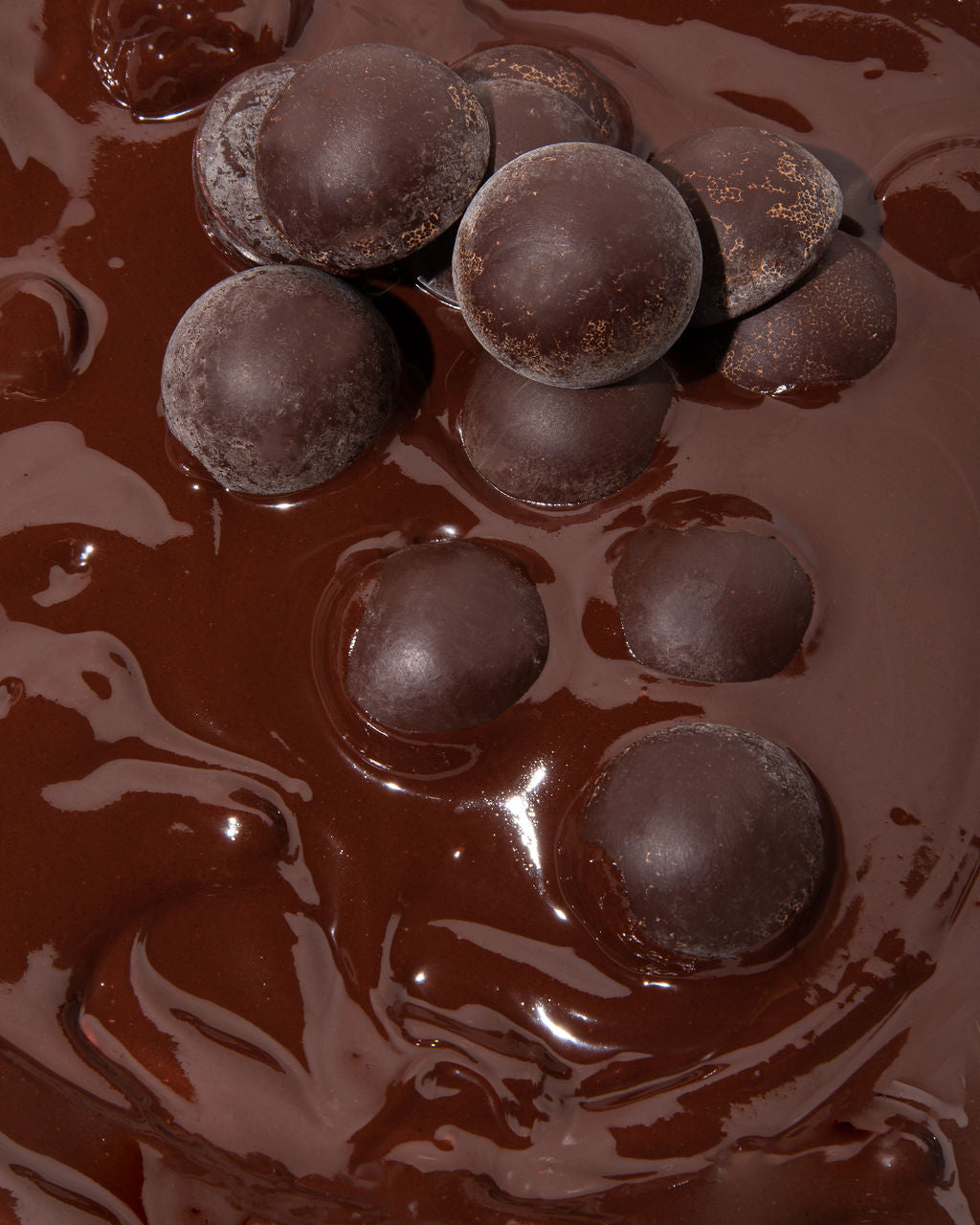
Once melted, it’ll return to its dark, smooth, delicious self.
Does cacao have side effects?
It can.
Cacao contains caffeine and theobromine and can also be relatively rich in fibre, so large amounts may not agree with everyone.
Depending on the person and quantity, you may notice digestive discomfort, nausea, a racing heart, restlessness or difficulty sleeping.
More cacao isn’t more spiritual.
If your body says that’s enough, listen.
Is cacao psychoactive or hallucinogenic?
Cacao can certainly make you feel different, but it isn’t a classic psychedelic or hallucinogen.
Its caffeine and theobromine can influence alertness, mood and physical sensations, but cacao doesn’t produce the psychedelic effects associated with substances such as LSD or DMT.
You don’t need to call cacao an entheogen for it to be extraordinary.
It’s cacao.
That’s already enough.
Why is cacao toxic to dogs?
Because dogs metabolise theobromine and caffeine much more slowly than humans do.
Enough cacao or chocolate can cause vomiting, diarrhoea, agitation, abnormal heart rhythms, tremors, seizures and, at sufficiently high doses, death.
Pure cacao and dark chocolate contain particularly high concentrations of theobromine, so keep them well away from dogs.
If your dog eats cacao or a significant amount of chocolate, contact your vet promptly rather than waiting for symptoms.
Cacao for you.
Absolutely not for Tilly.
Still curious?
Good.
Cacao is an enormous world and we’re still learning too. Ask questions, read labels, question extravagant claims, learn where your cacao comes from — and above all, taste the bloody stuff.
Cacao that stirs your senses…