
Organic Cacao: What Does Organic Certification Actually Mean?
Organic cacao sounds simple enough. No nasty chemicals. Better farming. Better for the planet. Better for us. Look for the little organic badge and job done.
Except, as usual, food systems are considerably more complicated than a logo.
So let’s undress this one.
First things first:
Organic and certified organic are not necessarily the same thing.
A cacao farmer can grow cacao without synthetic herbicides, pesticides or fertilisers and still not be allowed to sell that cacao as certified organic.
Why?
Because organic certification isn’t simply a description of how something was grown.
It’s a certification system.
So who actually owns “organic”?
Nobody owns the word organic globally.
There isn’t one international Organic Headquarters handing out green badges to farmers around the world.
Different countries and markets have different organic regulations, standards, certification bodies and logos.
In the United States, for example, the USDA Organic seal is an official government mark overseen by the USDA’s National Organic Program.
The European Union has its own organic regulations and organic logo.
Here in New Zealand, certification bodies such as BioGro and AsureQuality operate certification programmes, including programmes connected to particular export-market requirements.
So when you see an organic badge, one of the first questions worth asking is:
Certified by whom, and to which standard?
Already, we’re asking a better question.
What does a cacao farm actually have to do to become certified organic?
Again, this varies depending on the certification programme and the market the cacao is destined for.
But generally, becoming certified involves considerably more than promising not to spray glyphosate on your cacao trees.
A producer may need to document how the farm is managed, what inputs are used, where those inputs come from, how crops are grown and harvested, how organic cacao is kept separate from non-organic products, and how the cacao can be traced through the supply chain.
There are records.
Management plans.
Inspections.
Audits.
Certification decisions.
And ongoing compliance.
Depending on the standard, land may also need to go through a conversion period before the crop can be sold as certified organic. Under the USDA system, for example, land producing an organic crop must have had no prohibited substances applied for three years before harvest.
Then certification needs to be maintained.
It isn’t simply a badge you earn once and keep forever.
And yes, certification costs money
This is another part of the organic story we don’t talk about very often.
Someone has to pay for the people reviewing the paperwork, inspecting farms, assessing compliance and administering the certification system.
Certification costs vary enormously depending on the country, certifier, size and complexity of the operation.
There can be application fees.
Audit and inspection costs.
Annual certification fees.
Travel expenses.
Additional site costs.
Product and label approvals.
And, importantly, the time required to manage all of it.
The money generally isn’t disappearing into some mysterious global “organic” pot. It goes through the particular certification and regulatory system being used, including the organisations doing the assessment, auditing, administration and certification.
Those systems cost money to operate.
And there is genuine value in that work.
But there is another side to this story.
What happens when you’re a tiny cacao farmer in the Pacific?
This is where things become particularly interesting for Mamamuti.
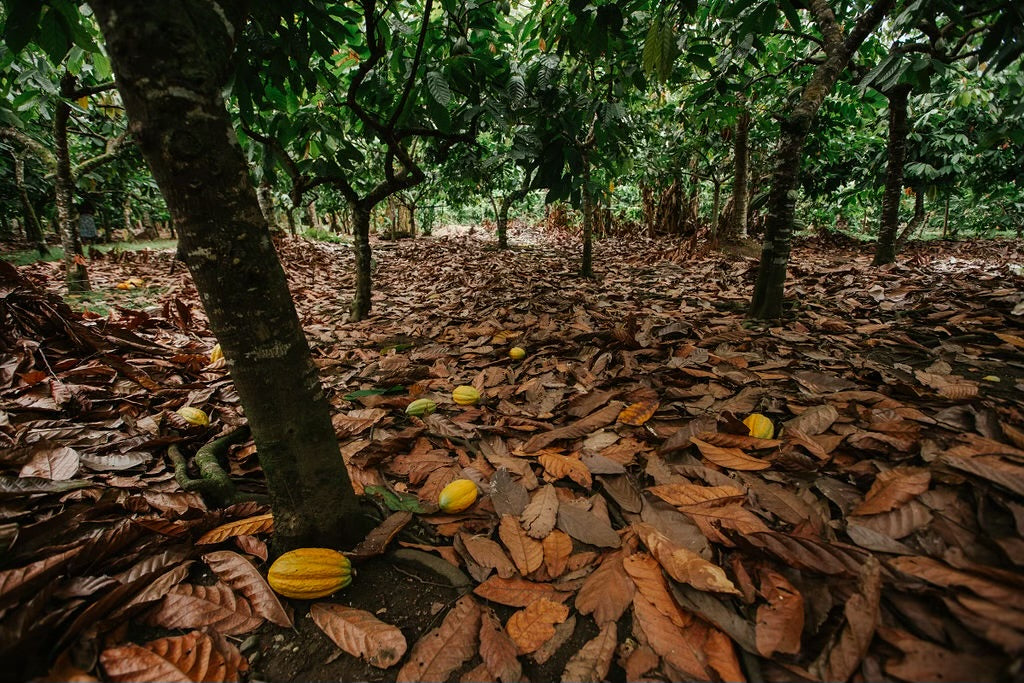
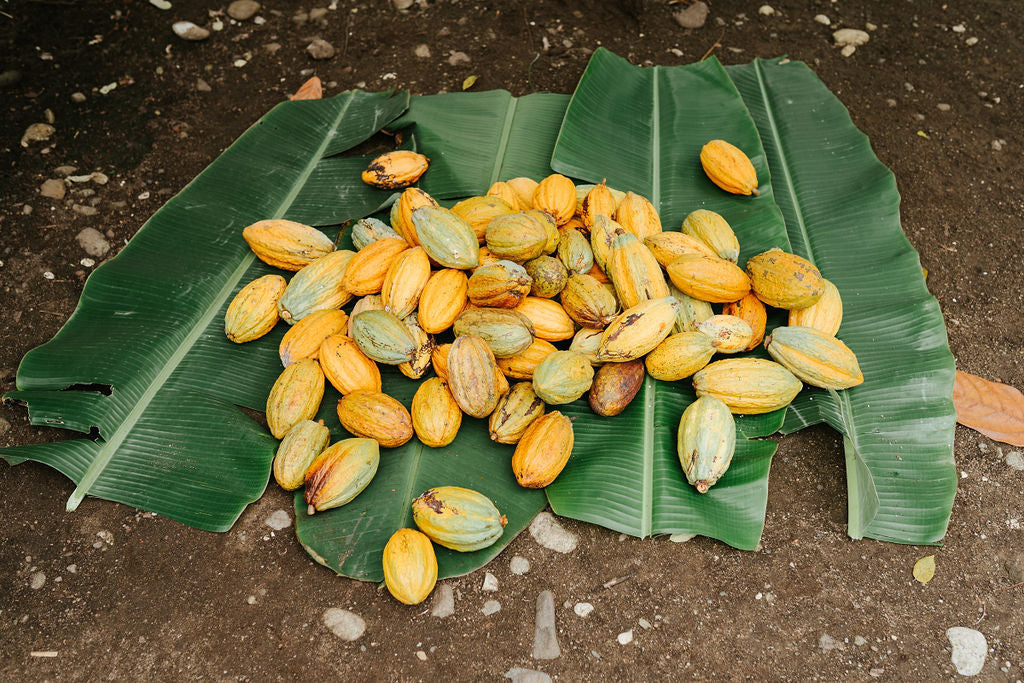
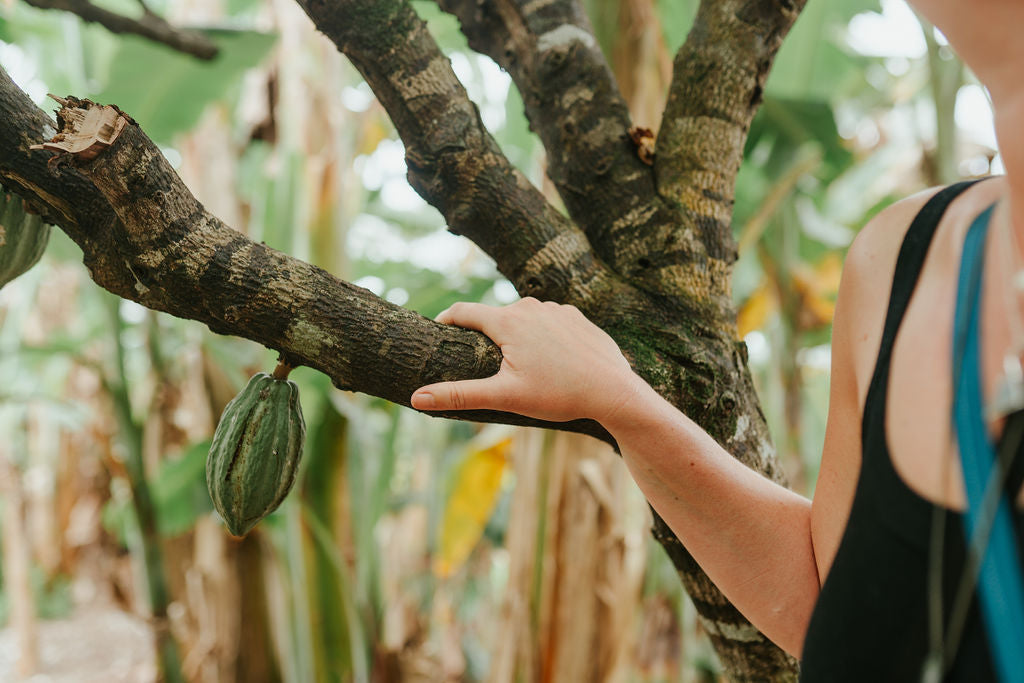
We work with small farming communities in the Pacific where cacao can be grown in incredibly diverse tropical environments alongside other plants and food crops.
Some of the farming communities we support have very limited access to the synthetic agricultural inputs that industrial farming systems elsewhere have relied upon.
They may already be farming without synthetic herbicides or fertilisers.
They may be working within diverse food-growing systems that have existed long before regenerative agriculture became a fashionable phrase in the Western wellness world.
And yet:
That doesn’t automatically make their cacao certified organic.
For that, somebody still has to prove it.
Document it.
Audit it.
Certify it.
And pay for the system that verifies it.
Which raises a question I find fascinating:
If a farmer has never used the chemical we’re paying someone to prove they don’t use, what exactly are we certifying?
There is an answer.
We’re buying independent verification.
And independent verification has value.
It protects consumers from businesses simply writing “organic” on anything they fancy.
It creates standards.
It creates accountability.
It can provide access to valuable export markets.
These aren’t insignificant things.
But perhaps the certification badge still doesn’t tell us the whole story.
Certified organic doesn’t necessarily mean regenerative
This distinction matters enormously to me.
Organic certification tells us whether certain standards have been met.
It doesn’t necessarily tell us everything about the health and resilience of the farming ecosystem.
A farm can comply with an organic standard without representing everything I personally value about regenerative agriculture.
And a tiny, uncertified cacao farm can potentially be extraordinarily biodiverse, low-input and regenerative.
These are different questions.
Which is why at Mamamuti, I’m interested in going beyond the badge.
Maybe we’re asking the wrong question
When we pick up cacao and see CERTIFIED ORGANIC, it feels reassuring.
And that’s understandable.
But perhaps instead of stopping there, we could ask:
How was this cacao actually grown?
What does the farm look like?
What else grows alongside the cacao?
What inputs are used?
What isn’t used?
Who are the farmers?
How much were they paid?
Is the soil becoming healthier?
Is biodiversity increasing or decreasing?
Does certification make economic sense for these particular farmers?
And perhaps most importantly:
Can the company selling me this cacao actually answer those questions?
Because an organic badge can tell us something useful.
But it can’t tell us everything.
The badge isn’t the farm
This isn’t an argument against organic certification.
Certification exists for good reason.
Without independent standards and auditing, any company could make environmental claims and ask consumers simply to trust them.
But certification should perhaps be the beginning of our curiosity rather than the end of it.
Because a farm doesn’t suddenly become better the day somebody puts a badge on its cacao.
And beautiful farming doesn’t suddenly become questionable because a farmer cannot afford, access or justify a certification programme.
Sometimes the most interesting information isn’t printed inside the little green logo.
It’s found by asking:
Who grew this?
How did they grow it?
What did they get paid?
And what is happening to the land because we chose to buy it?
Those are the questions I’m interested in.
No halo.
No greenwashing.
No fluff.
Just better questions about where our food actually comes from.
This is part of UNDRESSING CACAO - an ongoing Mamamuti conversation stripping away the marketing, mythology and wellness speak surrounding one of the world’s most extraordinary foods.




Leave a comment
This site is protected by hCaptcha and the hCaptcha Privacy Policy and Terms of Service apply.